Showing posts with label current events. Show all posts

Sunday, June 6, 2010

Home. Again.


So today was my first day off work in Val Marie, Saskatchewan. In this bustling town of 110 people, where every business except for my office closes on a Sunday, what is one to do for entertainment to last 24 hours?

Well, you'd be surprised how much is available. I've already found that two of my seven nights of freedom during the week are going to be routinely abducted by a movie being shown at the local community hall (this past Friday it was Clash of the Titans - which almost got me posting about Sam Worthington and how much I wish he would do just one scene without his shirt on), and another night devoted to an ongoing indoor soccer tournament between some of the local researchers (biologists and archaeologists).

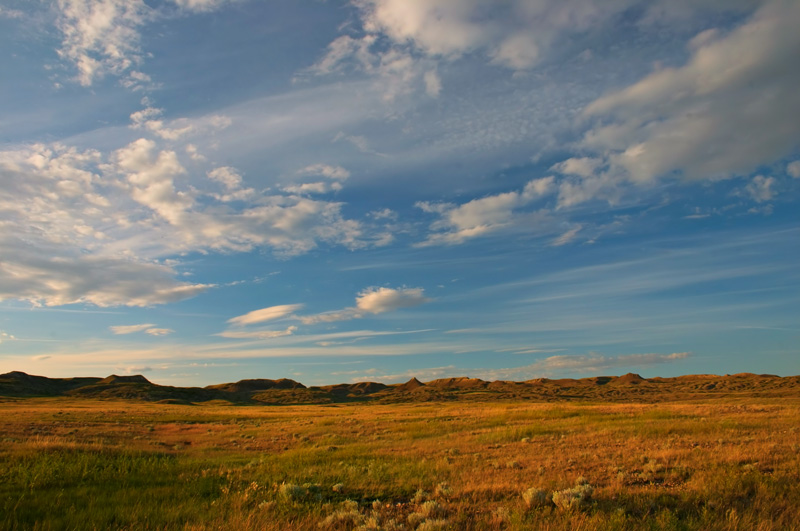
Today though, I read. A lot. Finished off Nineteen Eighty-Four and am now moving on to A Single Man by Christopher Isherwood. When I wasn't reading, I walked around town and found a church with a piano that is open 24 hours a day. I quickly gathered my music from my home and practiced. For more than an hour and a half - it was so nice to return to an activity I was expecting to abandon for months. I also, almost, went to my first ever cow-branding - only missing my ride because of poor communication. When all that ended, I made myself a salad, packed it into some tupperware, walked to a local radio tower and climbed up to a platform, and watched the sun set. Sounds pretty much idyllic. If I ever figure out how to be gay in this town, I may just fall in love with it out here.

Interestingly enough, I was asked earlier today if I was gay. I think it was a passing question - perhaps even an attempt at a joke. I denied that I was - it wasn't exactly a safe sort of scenario. But this is the second or third time that I have done this since I have been 'out', and each time it makes me more and more retrospective about whether or not I am comfortable with who I am. And each time I ask this question, I get shoved between a rock (the reality that I may not be in a safe place) and a hard place (the principle that I should be proud of myself regardless of who and where I am).

But, once again I am spending too much time talking about myself when the point of this post is to develop the topic of Malawi and Africa and their ideals about homosexuality, because I have found an interesting article on BBC Newsworld that considers how Africans - at least those who have been informed - have perceived Malawi's defence of traditional sexual identities.

What I have found by doing some digging is an interesting story – a debate between the rich and poor, with Tiwonge Chimbalanga and Steven Monjeza being used as pawns in the middle of an international storming of the bridgades. And many Africans being none-too-pleased with it.

You see, many people from countries that donate enormous amounts of aid to Malawi and other African countries that have laws against homosexuality have recently been thrown over the edge of tolerance for intolerable legal policy; the recent development of legislative documents in Uganda and the arrests of these two men have tossed them into the deep seas of international scrutiny. As such, many internationals (for lack of a better short-form term) have said that their governments should pull aid from countries that do not fully recognize the individual rights that many states in the West use as the compass for legislation. One person, writing under the name modernJan, wrote:

"Should we leave Africa to handle homosexuality at its own pace and in whichever way it sees fit?" Imagine it's the late 1930's and someone asks the question: "should we leave Nazi Germany to handle Jewry at its own pace and in whichever way it sees fit?" My answer: if Africa starts killing off homosexuals than the West should kill off the flow of aid money. How could anyone condone that gay people in the West pay taxes that are partly used to prop up regimes in Africa that persecute gays?

Her idea was mimicked by WilliamLondon1977:

Honestly, these backward little countries and their "we reject Western moral paradigms but we actually rely on their money and ongoing goodwill" - if they don't care about evolving towards globally accepted standards of human rights or how they are seen by more enlightened, developed countries, fine, we get it -- but they shouldn't expect any aid or anything. Try paying for your anti-retrovirals with a crate of chickens and see how far you get.

This is extremely sad indeed.


Fascinating.

The response in Africa has been very different. Many Malawians have used this court ruling and their stand against international powers as a means of asserting their sovereignty as a state to create and impose their own laws. On a website called the BNL Times which acts as an online daily for Malawi, many blogs and features have offered their perspective on the events surrounding Tiwonge Chimbalanga and Steven Monjeza’s arrests. What one finds is a high degree of pride.

In the view of Vales Machila, it is the right of the government of Malawi to enforce the laws that they have created within the confines of their constitution, even if they conflict with the ideals of the United Nations. This is the very definition of sovereignty; and, so long as the domestic population is in support of laws, they should not be repealed. It was the wheels of justice that turned and caught Chimbalanga and Monjeza underfoot, not hatred.

In order to defend his perspective, he references the Biblical ordinances against homosexuality – a source that is increasingly recognized as insufficient to defend legislation in the West. In Malawi, it would seem, that many of these laws are still valid. Machila also recognizes the role that power relationships between states has played in the development of international scrutiny:

Why should our laws be unimportant to anyone, just because we are a poor nation? This is abhorrent and grossly unfair. Malawi, by its own laws, committed no wrong in arresting and convicting the duo. It is most unfair for little Malawi to be threatened with aid suffocation for simply standing by its rights. Malawi, though tiny on the map, has rights too and her votes count on world forums. Where is respect for sovereignty of nations the world so much preaches about?

What I have found most interesting is that Africa has not always been a continent caught in homophobia. Like many ancient cultures that had limited communication with the Judeo-Christian world, homosexuality was once revered as a means of understanding the sacred. It was not uncommon for chiefs of African tribes to have, amongst their wives, boys and men with whom they would perform sexual acts. African homophobia is a product of colonialism – the laws upon which the modern African constitutions are based are European in origin. So, in a twisted way, the defense of Malawian laws against homosexuality is really a defense of the European influence in Malawi rather than a push against international pressures. What is being seen here is a complete acceptance of the immense changes that European colonization inflicted on the regions they took over, not a historically accurate reclamation of Africa – just a imagined sense of what Africa represents.

Daniel Nyirenda writes perhaps a more convincing tune, and also recognizes that steps are needed for Malawi to decrease their dependency on foreign aid so that they can stand up for their persecution of homosexuals in the future. He writes the following:

Some of the donors, in their argument, say Tiwonge Chimbalanga, a bride, and Steven Monjeza, groom, had not wronged anyone by holding an open gay wedding. This thinking is purely Western where they value personal freedoms ahead of societal freedoms. However, this argument is not a one-size-fits-all because here in Africa, we greatly respect societal values. It is against this philosophy that Monjeza and Aunt Tiwo, much as they did not hack anyone with a panga, they committed an offence by butchering the norms, cultures, the psyche and way of living of Malawian society. This line of thinking is one which Western people may find it hard to appreciate.

Once again, fascinating. What we see considered here is a conflict of worldview between the donors of the West and the people that are receiving the donations. According the Nyirenda, the open gay engagement that Chimbalanga and Monjeza used to celebrate their love for each other is an open defiance of the society that they live in and is, as a result, harmed the grander society. Interesting, as this same idea has been very strongly combated in the United States, where marriage equality still does not exist; what is argued south of the border is that gay marriage does not actually affect anybody outside of the couple. Nyirenda is attempting to argue otherwise as a cultural feature – though he provides no evidence, it is quite interesting.


I don’t want to paint all Africans, or all Malawians for that matter, with the same brush. There is a growing support, including some Anglican Clergy, that is pushing for greater levels of equality for homosexuals, starting by refusing to berate them as a people group in church.

Now here is the challenge for me as an individual that tries to have a more globalized perspective on the state of affairs, and attempts to imagine how powerlessness and powerfulness affect the ways in which individuals and states relate to each other. Here we’ve a situation in which the threat of removing International Aid has been applied to an issue that I find of great import – the propagation and development of international human rights.

And my response is this: What an easy way out.

In reality, international pressure very rarely alters how people view minorities. And it isn’t wrong for Vales to recognize that international pressures are likely being placed on Malawi because of their relative insignificance as an international power: similar international attacks are very rarely placed on China, Iran, or Saudi Arabia as they attack homosexual communities with equal and even greater vigor. Each of these nations is an economic and resource-rich powerhouse, capable of placing equal pressure on us as we can on them – and, it would seem, the individual human rights of homosexuals in Saudi Arabia are considerably less important than the West’s need to fill their car’s gas tanks.

And, in reality, Malawi does have the right to create its own legislation decreed by the ideals of Democracy and Self-Governance. Though both of these principles are somewhat fractured in modern international politics, it is not particularly naïve of the people of Malawi to want to maintain this ideal when they feel their rights for self-governance are being infringed upon. It is even a classic case.

In considering both of these realities, the only truly effective change can only come from within the state of Malawi – where the people of Malawi no longer feel as though the laws of the government reflect the realities of their life.

As an internationalist, even as a gay internationalist, I would find that the linking of foreign aid to gay rights is absurd, just as linking foreign aid to the refusal to sponsor abortion rights is absurd (thank you, Stephen Harper). In reality, foreign aid is about helping individuals and states create infrastructure and better the living standards of people around the world – providing necessary goods and services to people that otherwise wouldn’t have them. They are the closest thing that exist to international Equalization Payments and essentially a good thing in producing a more economically equal planet. Much as I like to think that my country has the right to impose their ideals (ideals I find generally much more agreeable than those found around the world) on nations when they are giving away my tax money, I would rather they put efforts into educating the population and providing the roots for the grass of change to grow out of. The more homegrown the legislation the more likely it is to last and change the society that it is meant to regulate. This is a good thing.

And, thanks to the efforts of Monjeza and Chimbalanga, some of these changes are starting to take place. A historic debate is starting in Malawi that may change the course of homosexual issues in Malawi and that region of Africa for the better. It seems that Harvey Milk may be living in Africa these days…


Anyways, I have to go out – Grasslands National Park was just designated as a Dark Sky Preserve and so we’ve got some programs coming up where we will be guiding visitors through constellations. Which means I have to know what they are and know how to operate a telescope. Which also means that I have the coolest job in the world – because the program also includes telling stories from many international cultures about the various constellations. This Wednesday I will be learning about some Cree stories from a Cree story-teller as he presents them to a class. I cannot wait.

Val Marie is the coolest place ever.

Saturday, June 5, 2010

Home.

So I just spent 20 minutes doing the dishes in my new home. I am currently living in the village of Val Marie, Saskatchewan; my new home is shared with 3 other twenty-somethings working in Grasslands National Park. Which is also where I am working. Which means that, in this paragraph, I have essentially shared the completion of two of my life goals. One, to work in a Canadian National Park, has been a lifelong dream that I recall setting for myself at a very young age. The second, to live in smalltown Saskatchewan and experience the Saskatchewan cultural environment in a completely new kind of way, has been a recent goal of mine. Sounds like a good summer, no?

The only thing that I miss is being gay. Having those rare opportunities to talk about my sexuality – talk about my arousal. Share my interests and desires with people. To laugh rather than to hide.

It makes me wish that I didn’t love every moment of what I am doing out here – how I could imagine a small community like this being so absolutely fantastic if I felt that there was a potential for one to be gay in it.

But there isn’t. Not only do I not recognize any other gay people in town, but even if I had there would be no opportunity to really discuss it. Life is an act here – one misstep and you fall off the stage. That said, falling off of a stage is a pretty fun event… and so I am resolving not to hide my sexuality here, but just recognize that it isn’t a topic of discussion or lifestyle meant to be on display.

Seriously, I feel like I have been transported to October of 2009.

But, just as I am being transported back into the closet, let us celebrate those events that are far more significant for the international gay community and socio-political change taking place. In one part of the world, two men have been released from their cages and in another dozens of men walked down a street declaring their pride for the first time. Once again, my own life is humbled by the events that are taking place around the world.

Regarding the latter – dozens of men walking a street and publicly declaring their pride for the first time. For the past couple months I have been considering moving to Russia to learn the language and do some historical studies into the Soviet Era. Somehow I managed to meet somebody online (I always feel foolish saying this, for some reason) who is from a region in Russia. He is gay, and so he has told me a great deal about the challenges of being gay in Russia. So, as a result of my academic interest and my personal connection with the Russian gay environment, I have been paying some degree of attention to what little news I can find from the country. And this time, it is rather good news.

For the first time ever, gay Russian men were able to avoid a police ban on their Pride Parade and secretly walk down a street for ten minutes before dispersing to avoid police raids on the event. The event took place in Moscow, the capital of the country, and the centre of the strongest pressures for and against the advancement of equality between the various sexualities of the Russian people. This pride, though short lived, is reason for celebration. Click here to see some images and read some testimonials from those involved in this event, and here to read an article written about this exciting event by the news agency Reuters.

Regarding the former – two men engaged to each other in Malawi who had been arrested in the December of 2009; Steven Monjeza, 26, and Tiwonge Chimbalanga, 20, were arrested after celebrating their engagement ahead of a wedding planned for 2010. In Mid-May they were convicted of gross indecency and unnatural acts because of their attraction to and love for each other.

On May 31st a presidential pardon was granted largely as a result of international political pressures from governments of the west, including governments who have not thus far granted gay men and women the right to marry. It is no surprise to many that Africa remains one of the regions of the world where homophobia is found at its most extremes – for months now an international campaign has been fighting homophobic legislation in Uganda that would make it illegal both to perform homosexual acts as well as to fail to report homosexuality in friends, family and neighbours. It is exciting to see that international pressure is working in defending the rights of the people, even if many of these successes are accomplished as a result of power politics – where the powers of aid can be suspended if African governments refuse to cooperate with the wealthy nations of the West.

It must be noted that neither of these exciting events have been completely free of challenges, and, despite their successes, both also manage to highlight the challenges faced internationally by the homosexual community. For example, in Malawi, Patricia Kaliati, Malawi's Minister of Gender and Children, said Monjeza and Chimbalanga's release did not mean they could continue their relationship – and indeed, they have been forewarned that if they were to continue their “activities” it is possible that they will be rearrested and reconvicted, with the pardon no longer being an effective means of protection. Indeed, the President Mutharika of Malawi, who said he was pardoning the pair on humanitarian grounds, also mentioned that, "In all aspects of reasoning, in all aspects of human understanding, these two gay boys were wrong - totally wrong.”

In Moscow, the pride parade that took place at the end of May was successful only because it took place. It was not sanctioned by the government – in fact, the Mayor of Moscow, knowing that it was taking place, sent policemen out in advance to ensure that it didn’t take place. It was considered an illegal protest by all levels of government – a sentiment shared by an estimated 80% of the Russian people. It was only by misleading Moscow’s police with misinformation as to the location and providing some diversions that the group was able to converge, collect the media for coverage, march for 10 minutes with their home-made banner, and then disperse into the homes and businesses that dotted their route before the police arrived to violently break up the peaceful protest. The organizers have noted that it is unlikely that such tactics will work in the coming years, and that their only hope for continuing successful protests lies in the European Human Rights courts and their interest in supporting Gay Russians.

Russia, it seems, is lost in the 70s – in the pre-Stonewall era. Malawi stuck in an era long even longer forgotten.

These events also serve to act as a foil to the Canadian environment. In the town that I now live in, a village of a mere 110 people, it does not surprise me that I will find it difficult being completely comfortable in my sexuality. And yet, if I were to get engaged my greatest concern would be social chastisement – not imprisonment. Moreover, in mid-June, I can walk the streets of Regina proud of who I am, in a parade recognized by the government and sponsored by some of my elected ministers. Walking back into the closet, as painful and challenging as it may be, does not deny me the rights that I have become accustomed to feeling – rights that don’t exist elsewhere.

Once again, I am humbled and grateful for my Canadian life.

Monday, May 3, 2010

The events that change our world are often subtle. Revolutions regularly start as an idea that is put into practice on a small scale, then flourishes, and suddenly consumes society. It is shocking when it happens, and nobody really understands what started it until they look back and consider the moment of human's ingenuity - when it caught on, and how it refused to fail.

As a people, we like to imagine that the world we live in is planned and controlled. My worldview, and the way that I have been trained to study history demands this. Things happen for a reason, that intent happens, and leads to other events. Everything is logical - can be traced.

We also like to focus on what many historians call "Pop History". The events that entered the media but really did very little to affect reality.

One such event happened today, in Vancouver, when a man was sentenced to a year in prison for his singular attack on a man walking down the street holding his boyfriend's hand. As a gay community, we should celebrate this moment for the use of the Charter of Rights and Freedoms in penalizing a hate crime - a rare event for us. In the same city though, Lisa Reimer, a Lesbian teacher working for a Catholic School was put on teacher suspension after parents found out about her orientation - the school board, knowing they can't fire her because of the Charter of Rights and Freedom, have put her on marking duty. Its a kick in the teeth.

We'll focus on these events, with really considering the social revolutions that are defining us a people. I don't mean to be offensive to Lisa or Jordan (the man attacked), but in the long run, the crimes committed against them should not be over-sensationalized by the press as the canvas of our society runs with paint of other, more distressing realities.

A film for you to watch - containing a message that we are all familiar with, but need to be continually reminded of.


How do I become hydro-carbon neutral? Is it event possible? How do I change my daily living so that I impact the natural and human environments not just less, but positively? When can my understanding of humanity extend beyond my community of friends and family, my national concerns, my international concerns, and become holistic? Holistic in the sense of definition rather than in the sense of the buzz-word.

A website I recommend to you.

----------------------------------------

I have a new goal. Everytime I go and purchase foods of any sort, I will donate food to the food bank. I'm going to try and start with one item per purchase - eventually I want to move towards a tithing machine. To humble me to the needs of the people around me that I don't know, that I choose not to see, and not to interact with. Who have an equal right to food as I do.

Monday, March 22, 2010

Change we can believe in.

You may not have noticed it happen.

There was a breeze though. A change in the direction of the wind. A faint but noticeable fragrance of lilacs. Something happened.

It was yesterday. I was outside enjoying the spring sun. And then it happened.


Americans found themselves covered by health insurance. All of them. When a new bill, complicated and completely new for an America that is increasingly wary of government involvement in their life, was voted on and passed the American houses of representation.

This is the kind of moment that, had it taken place two thousand years ago, would be written about by scholars as though some cloth separating the people from the experience of rightness was ripped in half.

Something happened. And for millions of Americans, life will never be the same.

Friday, March 12, 2010


I had intended this post to be about God, and starting to renegotiate what it means to be gay and christian (a response to a close friend of mine who challenged me last week), but far too many ridiculous events are taking place in the world. And so, once again, I am directed towards the topic of homosexuality.

For those of you who are unaware, I am trained as a teacher. For those of you who are unaware, my experience in high school was engulfed in bouts of depression largely circling around my burgeoning sexuality and concerns of coming out to a community that I was certain would not accept me. Once again, for those of you who are unaware, I largely entered the field of education convinced that I would provide some measure of assurance that homosexuality among the student body would become more and more accepted.


I was excited to hear that many schools in my city now have a Gay-Straight Alliance student body. I don't know if that would have resulted in me coming out in high school, but the idea of having a community in which I could find support would have really helped out a lot.

These kind of student groups do not exist in Mississippi. At a county high school in this southern American state, an 18-year old Lesbian student regularly receives education on what it means to live in society. Unfortunately, the education she is getting, both formal and informal, reminds me of why I chose not to come out to very many people in high school.

Constance McMillen was hoping to bring her partner to her high school prom. And wear a tuxedo. Her county school board, rather than saying no to her specifically (well, they already had told her no, but she persisted), decided to cancel the event entirely. Not only adversely affecting her but also her entire senior class. They've released a statement, quoting "distractions to the educational process caused by recent events" as the cause of the cancellation.

Monday, February 8, 2010

Harper you dirtbag!

I'm trying to think of all the traits I like in my politicians - the aspects of individuals that make me want to vote for them.

First is a strong moral compass that is centered around attempts to view the world objectively. In doing so, a great politician would pursue the ideals of equality, liberty, and the creation of a safe society. Also, they would focus on improving the lives of everybody in its sovereign realm, with an interest in social programming that benefits those parts of society that struggle to experience the same levels of equality and economic opportunity as are viewed as desirable. They would be interested in the environment - whole-heartedly interested. They would strive to make international cooperation a possibility rather than just a pipe-dream.

A great politician would have a soul. A wholly human soul.

And this great politician does not exist. I know that.

I also know that the current Canadian political culture does not predispose it to these kind of peoples. I also am beginning to see why the Canadian system of government is more broken than I believed it to be only days ago.

Canadian senate appointments have been contentious since the sixties, but gained prominence in 2004 and 2005 as Harper, then the Primeministerial candidate of the Conservative Party, promised to legislate senate elections for the federal government's Upper House. At the time, I felt the extension of more democratic rights to the people of Canada was quite dangerous - and, in reality, I still do. I don't know if it is valuable to have an upper house whose senators are elected in by the same people that are electing the government into power - I like to think that those appointed by the previous government can act as a measure of accountability on the current government.

But then I saw this today, in the news.

Bob Runciman, one of Harper's most recent appointments to the senate (yes, the same Harper that was elected to office on a promise of changing Senate appointment laws), is not a good politician. The Liberal Party of Canada has explained why by using Runciman's own words.

“We believe all references to sexual orientation should be removed from the Human Rights Code.” - 1994

“Homosexuality is essentially anti-family. It encourages promiscuous sexuality, a self-centred morality and socially irresponsible behaviour that exacts huge costs from society. The law has every right to discourage people from entering into paths that are demonstratively destructive, physically and psychologically, first to the homosexuals and to society itself.” - 1986


This man worked three times to remove homosexuality from the Ontario Human Rights Code during his time as an MLA for Leeds, Ontario. I'm glad he is now a senator in Canada's government.

But this does not surprise me. If we look at who else has been employed by Harper's government and certainly not reprimanded for his beliefs (ok, admittedly, this man was voted in again after that video was leaked - so he is employed by the people... though there are few people that would argue that Conservative's MPs are actually following the interests of the people...).

It is good to know who Harper puts into the government that has been granted, through history, sovereign rule over me. Who knows, maybe the next time Harper attempts to remove my right to marriage he'll have enough conservative MPs and Senators to get it through the house...